

Nuclear Museum Logo
Nuclear Museum Logo

National Museum of Nuclear Science & History

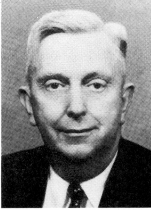
Paul Francis Kerr

MineralogistManhattan, NY

Columbia University
Scientist
Paul Francis Kerr

Paul Francis Kerr was an American mineralogist. A professor at Columbia University, he was recruited to locate supplies of uranium for the Manhattan Project. Among other locations, he traveled to the Shinkolobwe Mine in the Belgian Congo, the Northwest Territories in Canada, and various places in the western United States.

After World War II, Kerr worked with the Atomic Energy Commission to research uranium ore deposits in the Southwest. He chaired a commission to investigate problems with the international inspection of atomic materials and was involved in the First International Conference on the Peaceful Uses of Atomic Energy.

Kerr’s daughter, Dr. Ruth Kerr Jakoby, was a girl during World War II. An interview with Ruth about her father’s work on the Manhattan Project can be found here.

Paul Francis Kerr’s Timeline
1897 Jan 12th Born in Hemet, California.

1919 Received a B.S. in Chemistry and Mathematics from Occidental College.

1923 Received a Ph.D. in Geology from Stanford University.

19241965 Taught mineralogy at Columbia University.

19421946 Traveled to sites in North America and Africa to research and locate uranium for the Manhattan Project.

1945 Chosen by the Carnegie Endowment for International Peace to chair a commission to investigate the international inspection of atomic materials.

1955 Working with the United Nations, created a program on raw materials for the First International Conference on the Peaceful Uses of Atomic Energy in Geneva.

1981 Feb 27th Died of a heart attack in Palo Alto, California.

Related Profiles

Wolfgang Panofsky

Los Alamos, NM

Wolfgang “Pief” Panofsky (1919-2007) was a German-American physicist who became the director of the Stanford Linear Accelerator Center.

Robert A. Cornog

Los Alamos, NM

Robert Cornog (1912-1998) was an American physicist and engineer. When the United States entered World War II in 1941, Robert Cornog was working for the Navy on subsurface warfare and the development of ways to counter magnetic, undersea mines.

Mary Argo

Los Alamos, NM

Mary Argo was a physicist at Los Alamos during the Manhattan Project. She and her husband, physicist Harold Argo, were students of Edward Teller.

Charles W. Hagen

Chicago, IL

Charles W. Hagen was a research assistant at the University of Chicago’s Metallurgical Laboratory (“Met Lab”) during the Manhattan Project.