


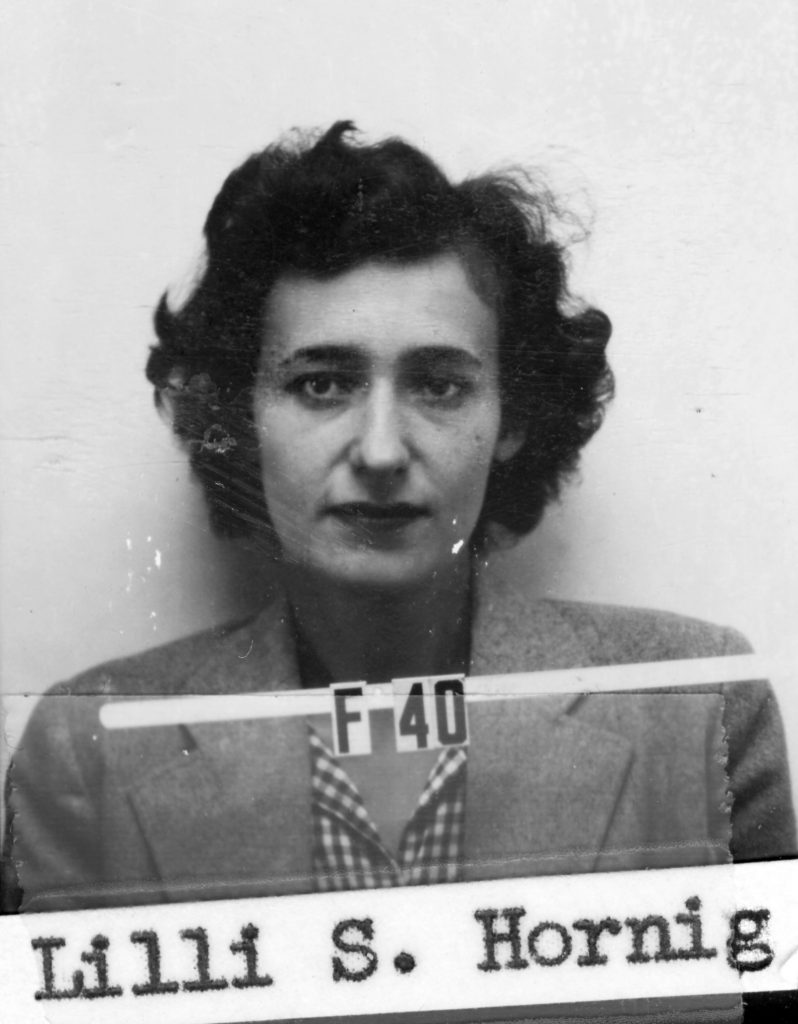
Lilli Hornig is a Czech-American chemist.
Hornig was born on March 22, 1921 in a small town outside of Prague. When she was eight, her family moved to Berlin. After the Nazis came to power in 1933, Hornig’s father was threatened with imprisonment in a concentration camp, and the family immigrated to the United States.
Her family settled down in Montclair, New Jersey. Hornig completed her undergraduate education at Bryn Mawr. After that, she began a graduate program at Harvard.
However, her studies were interrupted to work on the Manhattan Project. In 1944 her husband, Don Hornig, was recruited by George Kistiakowsky to work at Los Alamos. Lilli Hornig went with him. She initially worked on plutonium chemistry. However, after concern was raised that plutonium could cause reproductive damage for women, she began working for the explosives group.
Hornig was among the Los Alamos scientists who signed a petition to have a demonstration of the bomb’s destruction rather than dropping it on civilian populations in Japan.
After the war, Hornig completed her Ph.D. in chemistry at Brown University. She later served as chairwoman of the chemistry department at Trinity College in Washington, D.C. She was also the founding director of Higher Education Resource Services (HERS), a non-profit that seeks to advance female involvement in higher education.