


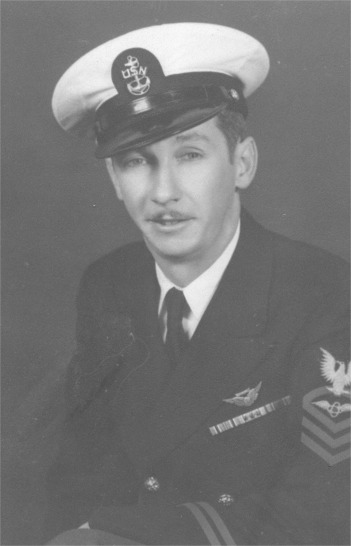
Richard Jack Oliver (1917–2007) was a U.S. Navy veteran and technical specialist whose career spanned World War II naval aviation and America’s postwar nuclear weapons program. Born in Hiawatha, Kansas, on April 3, 1917, Oliver developed an early interest in aviation, photography, and mechanical engineering, skills that later shaped his military and scientific career.
Oliver enlisted in the U.S. Navy in January 1942, serving as a radio and radar operator and aerial gunner in the Pacific Theater during World War II. He supported combat operations against Japanese forces and worked with early airborne radar systems aboard naval aircraft. He later returned to military service during the Korean War, serving as a chief electronic technician responsible for radar maintenance on patrol aircraft.
In 1952, Oliver joined Lawrence Livermore National Laboratory in California, where he worked in high-speed photography and supported the postwar nuclear weapons program. He participated in nuclear tests in the Pacific, including Operations Castle (1954) and Redwing (1956), as well as tests at the Nevada Test Site. His work involved photographic and diagnostic support for nuclear experiments, placing him among the technical personnel who helped carry out the United States’ nuclear weapons testing program during the early Cold War. He subsequently worked in computer maintenance, helping maintain some of the laboratory’s earliest computers until his retirement.
Oliver’s career reflected the growing importance of electronics, photography, and computing to American military and nuclear research. His experiences as a naval aviation technician and nuclear test support specialist illustrate the contributions of skilled technical personnel to the development of the nation’s nuclear program. He died on August 7, 2007, at the age of ninety.
For more information about Jack Oliver, please visit shu-aero.com