


Nuclear Museum Logo
Nuclear Museum Logo

National Museum of Nuclear Science & History

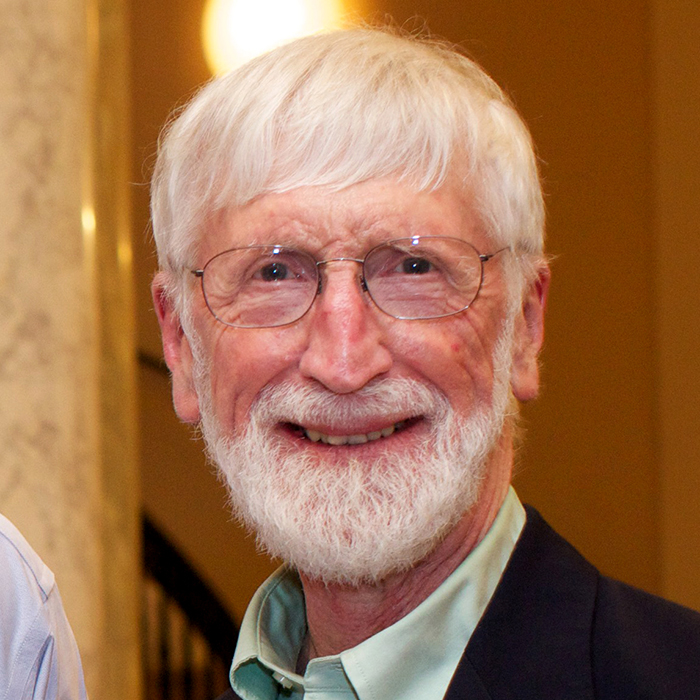
Dr. Andrew Hanson is a physicist and a Professor Emeritus of Computer Science at Indiana University, Bloomington. Hanson is the son of Alfred O. Hanson, who worked at Los Alamos on the Manhattan Project.

Andrew was born at Los Alamos. In a 2014 oral history interview, Rose Bethe, wife of Nobel Prize-winning physicist Hans Bethe, remembered Andrew’s prodigious size at birth: “One of the women living in our house – we were in one unit of a four unit house, and one of the other women had a baby very shortly after Henry. Henry had weighed seven pounds; that baby [Andrew] had weighed nine pounds and it showed for the whole two years that we lived together. That baby was always two steps ahead of what Henry was doing. It was my first lesson in whole long intrauterine life is useful. It had come very late, that boy came I think two weeks late or something like that, whereas Henry came early.”

Andrew Hanson’s Timeline
1971 Received his PhD in theoretical physics from MIT.

19711980 Worked in theoretical physics.

19892012 Worked as Professor of Computer Science at Indiana University, Bloomington until his retirement.

Henry Frisch, James Nolan, and Andrew Hanson at the Atomic Heritage Foundation’s Manhattan Project 70th anniversary events in June 2015 

Related Profiles

Richard Gaul

Los Alamos, NM

Richard Gaul was fresh out of high school when he arrived in Los Alamos.  He was a member of the Provisional Engineer Detachment (PED).

Meyer Steinberg

Oak Ridge, TN

Meyer Steinberg is a chemical engineer and a veteran of the Special Engineer Detachment. After graduating from Cooper Union College with a degree in chemical engineering, Steinberg was drafted and placed in the Special Engineer Detachment at Oak Ridge.

Robert Harris

Los Alamos, NM

Stanley Stewart

Los Alamos, NM

Stanley Stewart was the Contracting Officer at Los Alamos during the Manhattan Project. After the bombings of Hiroshima and Nagasaki, Stewart wrote, “The security restrictions on our part of the work [at Los Alamos] have been more rigid than than on any other portion of the entire Manhattan Project.