



Col. Oliver Haywood was on General Leslie Groves‘ staff from May to December 1946. Haywood had a long military career after graduating from West Point in 1936 and receiving both a M.S. from Harvard University and a Doctor of Science in Civil Engineering from the Massachusetts Institute of Technology. On Groves’ staff he witnessed the Bikini Atoll nuclear tests as part of Operation Crossroads. Afterwards, Haywood helped design atomic war plans for the Air Force before leaving the service in 1953.
Oliver G. Haywood
General StaffLos Alamos, NM
Marshall IslandsWashington, DC
Manhattan Project VeteranMilitary VeteranPacific Nuclear TestsPostwar Nuclear Program
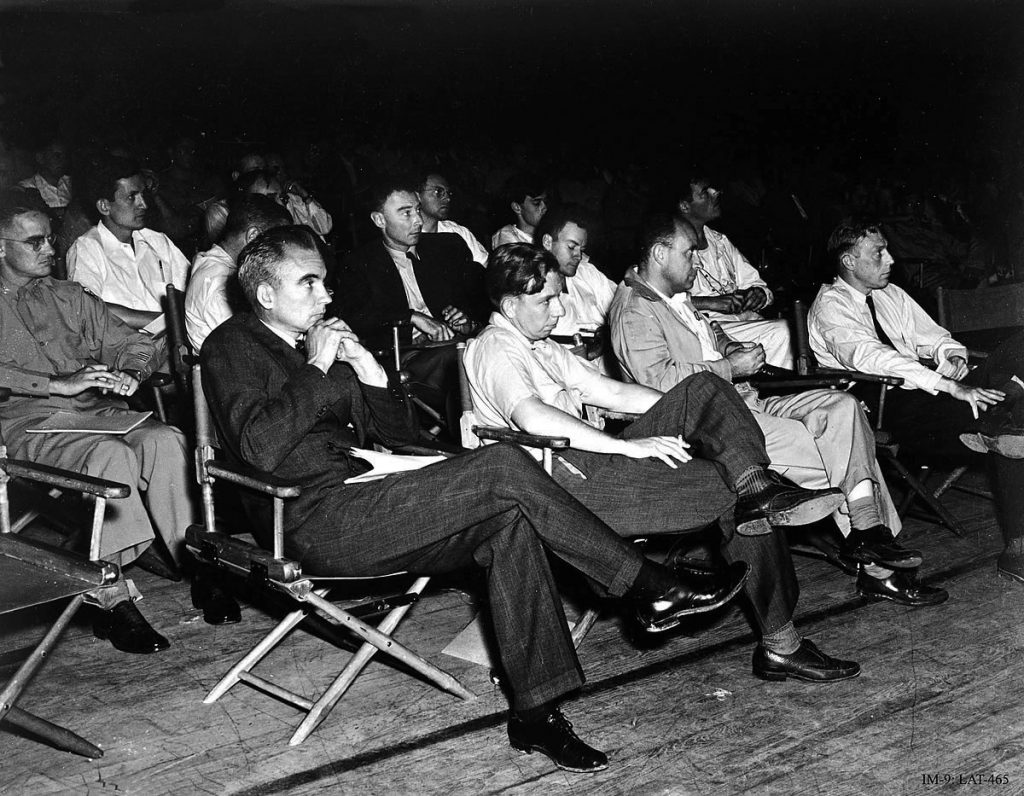
Oliver G. Haywood’s Timeline
1911 Nov 29th Born in Highland Mills, New York
1936 Jun Graduated from United States Military Academy at West Point at the top of his class.
1940 Jun Received M.S. degree from Harvard University Graduate School of Engineering
1940 Aug Received Doctor of Science degree from Massachusetts Institute of Technology
1946 Apr Transferred to headquarters of Manhattan Project as senior advisor to General Leslie Groves. Participated in Operation Crossroads, the atomic weapons tests at the Bikini Atoll in the Pacific
1953 Retired from active duty and became President of the Huyck Corporation