Nuclear Museum Logo
Nuclear Museum Logo

National Museum of Nuclear Science & History

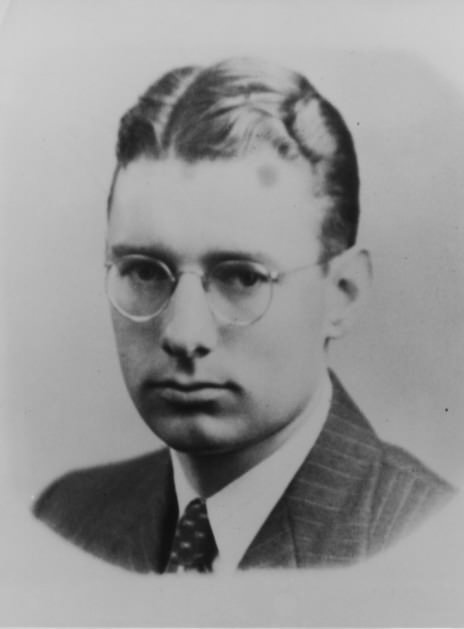
Peter Newport Bragg, Jr.

Chemical EngineerPhiladelphia, PA

EngineerManhattan Project Veteran

Peter Newport Bragg, Jr. served as a civilian engineer working for the U.S. Navy beginning in 1944. A brilliant chemical engineer, he volunteered for a dangerous assignment while employed by the U. S. Navy Research Laboratory's "pilot-plant" at the Philadelphia Navy Yard. As a part of the Manhattan Project, it was the Lab's mission to perfect the thermal diffusion process for the enrichment of uranium. On Sept. 2, 1944, while working to unclog a tube in a complex array of pipes, Peter was killed in a horrific explosion that sent a cloud of radioactive uranium hexafluoride over much of the Navy Yard including the battleship USS Wisconsin, berthed just 200 yards away. A fellow co-worker, Douglas Meigs, was also killed. His work and that of the Naval Research Laboratory was crucial to the development of the first atomic bomb. You can read more about the tragic accident in Philadelphia here

Related Profiles

John H. Williams

Los Alamos, NM

John H. Williams (1908-1966) was a Canadian-American physicist. Williams transferred to Los Alamos in early 1943 and was among the first group of scientists to arrive on the Hill.

W. Calvin Moore

K-25 Plant

W. Calvin Moore was an American inspector and engineer. W. Calvin Moore worked for the Ford, Bacon and Davis construction contracting firm in the Inspection Division when he was assigned to a position at the K-25 plant in Oak Ridge, Tennessee.

Ernest A. Wende

Oak Ridge, TN

Ernest Wende was transferred into the Manhattan District, the branch of the United States Army Corps of Engineers tasked with overseeing the construction of critical Manhattan Project sites, shortly after its formation in 1942.

D. J. Morton

T-Plant/200 Areas

Morton worked in the 200 East Area at Hanford during the Manhattan Project.