


Nuclear Museum Logo
Nuclear Museum Logo

National Museum of Nuclear Science & History

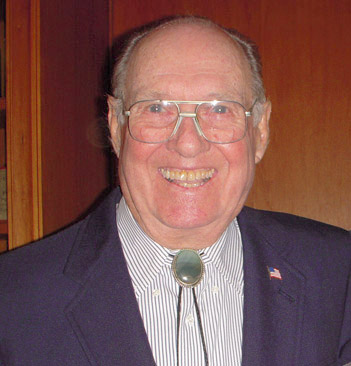
Watson C. Warriner, Sr. graduated from Virginia Tech in 1938 with a degree in chemical engineering. He was then hired by the DuPont company to work in their Engineering Department.

In January of 1944, he was sent to DuPont headquarters in Wilmington, where he was assigned to the heavy water group. About six months later, he was transferred to the separations area, and sent to Hanford, WA. He helped design and build the chemical separation plants at Hanford (also known as the 221 T-plant or “Queen Marys”).

After the war, he worked at the Savannah River Plant in South Carolina designing facilities. In 1955, he transferred to the Plastics Department of DuPont, and worked in sales for thermoplastics until retiring in 1981. 

Watson C. Warriner, Sr.’s Timeline
1938 Received B.S. in Chemical Engineering from Virginia Tech.

1939 Jan Joined the DuPont Chemical in Wilmington, Delaware, where he helped develop the world’s first synthetic rubber, neoprene.

1940 Jun Transferred to Memphis, Tennessee to help construct a smokeless powder plant.

1944 Assigned to help with the construction of T-Plant, the chemical separations plant at Hanford.

Related Profiles

M. H. Libby

T-Plant/200 Areas

Libby worked in the 200 W Area at Hanford during the Manhattan Project.

A. R. Johnson

Y-12 Plant

A. R. Johnson worked for the Tennessee Eastman Corporation at the Y-12 Plant.

Charles E. Williams

Oak Ridge, TN

Charles Williams worked for the United States Engineer District Office. He was a “very present help in time of trouble” in the early history of Oak Ridge, with his position in charge of warehousing and property he was one of the men who knew where everything was.

Gay V. Land

K-25 Plant

Attended the Massachusetts Institute of Technology.