


Nuclear Museum Logo
Nuclear Museum Logo

National Museum of Nuclear Science & History

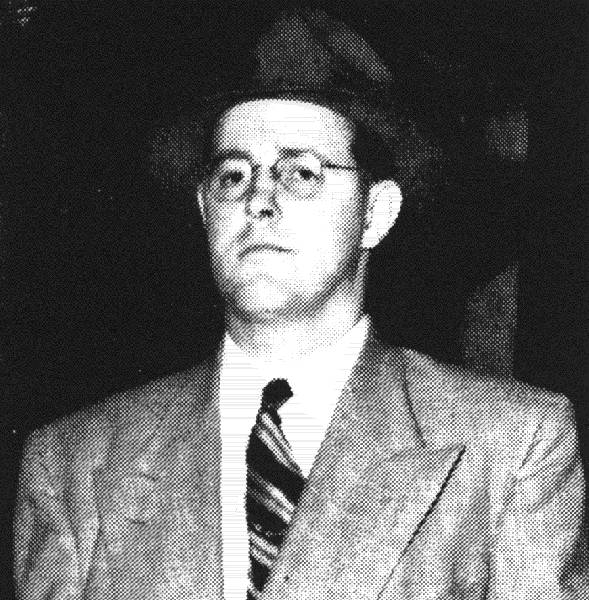
Robert Lamphere (1918-2002) supervised many investigations of Soviet spies during the Cold War. He served as the FBI’s liaison to the top-secret Venona Project, which worked to break Soviet codes and revealed the extent of Soviet espionage in the United States.

His early espionage cases focused on those who attempted to infiltrate the Manhattan Project. In 1950, his interrogation of Klaus Fuchs in London led to the identification and arrest of Harry Gold, David Greenglass, and Julius and Ethel Rosenberg.

Robert Lamphere’s Timeline
1918 Feb 14th Born in Wardner, Idaho.

1941 Sep Joined the Federal Bureau of Investigation.

1947 Transferred to FBI headquarters as a Supervisory Special Agent and placed in charge of counterintelligence on satellite countries of the USSR.

1948 Began work on top-secret Venona project to decode Soviet intelligence cables.

1950 May Interrogated Klaus Fuchs in London.

1955 Left the FBI.

2002 Jan 7th Died of prostate cancer in Tucson, Arizona.

Related Profiles

Philip Abelson

S-50 Plant

Philip Abelson (1913-2004) was an American physicist whose discoveries helped obtain the necessary uranium to build an atomic bomb.

Paul Francis Kerr

Manhattan, NY

Paul Francis Kerr was an American mineralogist. A professor at Columbia University, he was recruited to locate supplies of uranium for the Manhattan Project.

Lyman Briggs

Washington, DC

Lyman Briggs (1874-1963) was an American engineer, physicist and administrator.  In 1939, President Franklin Roosevelt called on Briggs to head the newly established the Uranium Committee, a secret project to investigate the atomic fission of uranium, as a result of the Einstein-Szilard Letter.

Richard H. Groves

Washington, DC

General Richard Groves was a cadet at West Point during World War II, getting ready to ship out for the invasion of Japan.