


Nuclear Museum Logo
Nuclear Museum Logo

National Museum of Nuclear Science & History

Frank Spedding

ChemistAmes, IA

Scientist
Frank Spedding

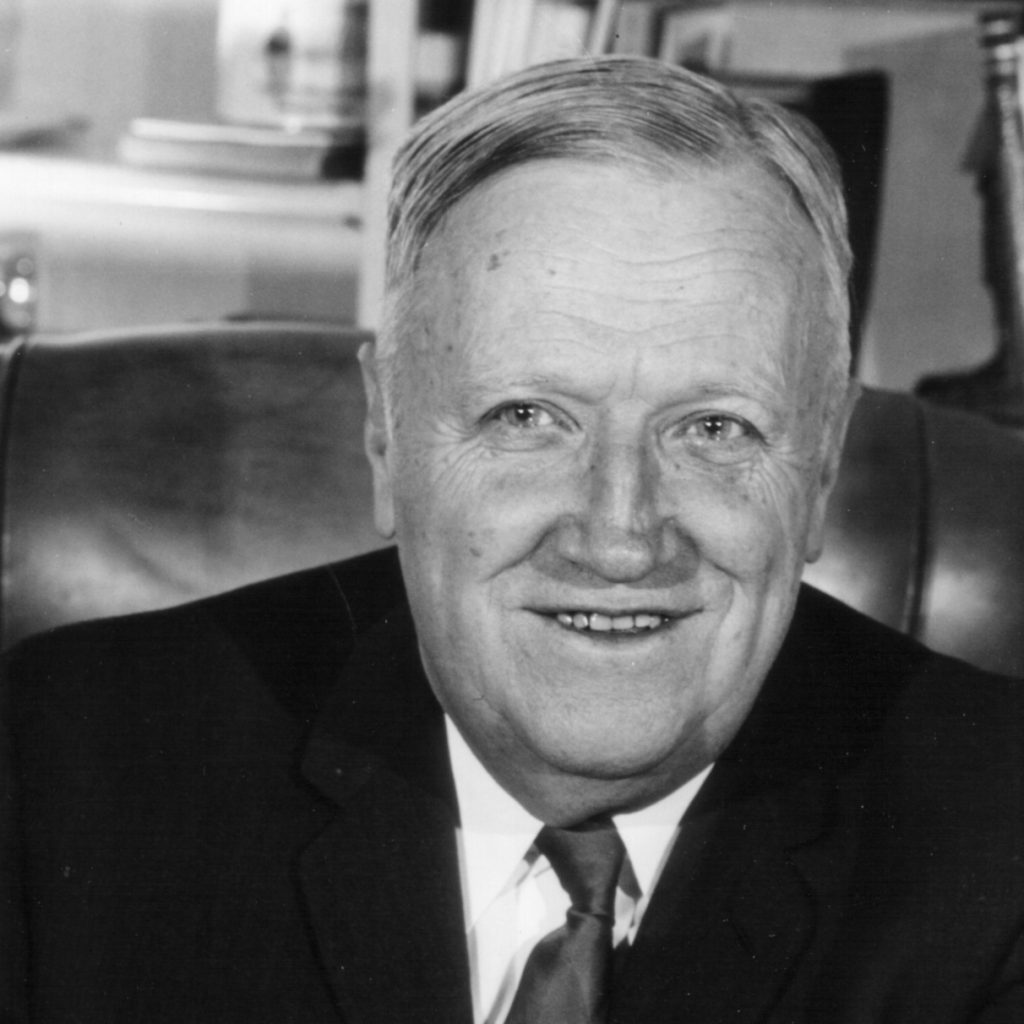
Frank Spedding (1902-1984) was a Canadian American chemist.

Before the war, Spedding’s claim to fame was developing a process to purify and separate rare earth elements using ion exchange resins. Because of his expertise, Spedding was asked to lead a team of scientists working on uranium extraction for the Manhattan Project. His team at Iowa State College developed the Ames process to efficiently obtain high purity uranium from uranium halides.

Spedding and his team provided two tons of uranium for Chicago Pile-1, the first controlled nuclear chain reaction, which Spedding witnessed on December 2, 1942. The “Ames Project” ultimately produced more than 1,000 tons of uranium for the Manhattan Project.

Spedding later served as founder and director of the Ames Laboratory, a United States Department of Energy national laboratory affiliated with Iowa State University.

Frank Spedding’s Timeline
1902 Oct 22nd Born in Hamilton, Ontario.

1929 Received Ph.D in chemistry from Berkeley.

1941 Asked to lead a team to develop an efficient means of extracting pure uranium.

1947 Founded the Institute of Atomic Research and the Ames Laboratory under the U.S. Atomic Energy Commission.

19471968 Directed the Ames Laboratory.

1984 Dec 15th Died in Ames, Iowa.

Related Profiles

Rebecca Bradford Diven

Los Alamos, NM

Rebecca Diven graduated from USC in June of 1941, and became entangled with national defense work at CalTech in 1943.

Richard Meservey

Idaho Falls

Richard Meservey worked for many years as an employee at the Idaho Falls laboratory. He received a B.

Viktor Adamsky

Russia

Viktor Adamsky was a Soviet physicist. After graduating from Moscow University in 1950, Adamsky was assigned to Sarov (also known as Arzamus – 16), a secret closed city, where he worked in the theoretical department.

Leon E. Morse

X-10 Graphite Reactor

Attended Brooklyn College.